What researchers measure when your heel hurts on the first step.
Plantar fasciitis is one of the most common reasons for heel pain, and it can linger for many months. This page explains what studies in this area test and how they track pain, walking and the tissue under your heel.
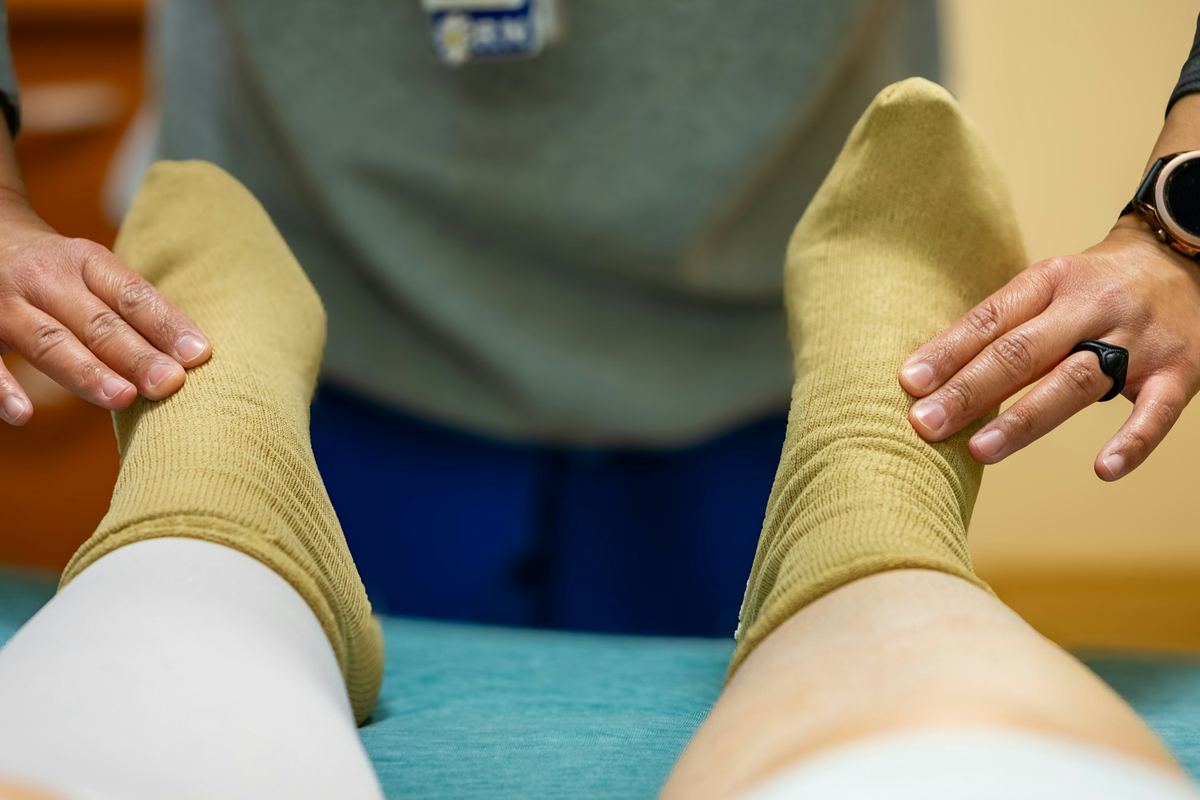
Plantar fasciitis is irritation of the plantar fascia, the thick band of tissue that runs along the sole from the heel to the toes. The pain is usually under the heel or along the arch. It is often sharpest with the first steps out of bed, or after sitting for a while, and it may ease as you warm up.
Living with it means stretching before you stand, keeping supportive shoes by the bed and thinking twice about long walks or a day on hard floors. It is common in runners, people who stand at work and people carrying extra weight. Many cases settle over time, but some last a year or longer.
Research areas
What plantar fasciitis research looks at
The kinds of question studies near you are asking about plantar fasciitis.
Stretching and strength programs
Guided calf and foot exercises compared with each other or with usual care.
Night splints and inserts
Splints that hold the foot flexed overnight, and shoe inserts that support the arch.
Shockwave sessions
Sound waves sent into the heel over a few sessions, aimed at long-lasting pain.
Injections into the heel
Different injected treatments compared for pain relief and how long the effect lasts.
Ultrasound of the heel
Using ultrasound to see the fascia thicken and settle as pain changes.
When plantar fasciitis symptoms shift
Heel pain is usually worst with the first steps in the morning, so many plantar fasciitis studies ask you to rate your pain soon after you get out of bed.
Measuring change
How a plantar fasciitis study measures it
Studies need the same yardstick at every visit, so they can tell whether anything changed.
First-step pain ratings
You rate the pain of your first steps each morning on a simple scale, often in a diary.
Foot function questionnaires
Questions about walking, standing, stairs and daily tasks, scored the same way each time.
Fascia thickness on ultrasound
An ultrasound scan measures how thick the plantar fascia is near the heel bone.
Step counts
A wrist or hip tracker counts your steps to show how much you move during normal weeks.
Before a plantar fasciitis study: what you may pause
A heel pain study may ask you to hold off on pain relievers on study days, or to wait a while after a steroid injection before starting. That waiting stretch is a washout period, so earlier treatment does not blur the results. You may be asked to keep your shoes, inserts and exercise routine the same throughout. Do not stop or change anything without talking to your own doctor first.
Questions worth asking a plantar fasciitis study team
Write these down before you call a plantar fasciitis study, and add your own.
- Will the study give me inserts, or ask me to wear my own?
- Is there an exercise program, and how much time does it take each day?
- Can I keep running or walking as I do now?
- Will an ultrasound or other scan of my heel be part of the visits?
Plantar fasciitis terms in plain English
- Plantar fascia
- A thick band of tissue under the foot that links the heel bone to the toes and supports the arch.
- Orthotic
- A shoe insert, ready-made or custom, that supports the arch or cushions the heel to ease strain.
- Shockwave therapy
- A treatment that sends pulses of sound energy into tissue, used for long-lasting heel and tendon pain.
Plantar fasciitis: what people ask us
The other conditions on Julvari
Not exactly. A heel spur is a small bony growth seen on an x-ray, and many people have one without pain. Plantar fasciitis is irritation of the tissue under the foot. Your own doctor can explain what your pain comes from before you look at heel pain studies.
It depends on the study. Some ask you to keep your activity steady so changes in pain are easier to read, and others include a set walking or exercise plan. The study team explains this, and your own doctor can tell you what your foot can handle.
No. Plantar fasciitis is common in people who stand at work, people who walk a lot and people who rarely exercise. Studies in your area may look at any of these groups. Each study team sets its own requirements and decides who can take part.
No. Julvari does not run, fund or recruit for studies and passes nobody’s details to a study. Our heel pain updates arrive now and then, by email, or by text if you ticked that box, and cover research around your area. Reaching a study team is something you do yourself.
Follow plantar fasciitis research close to home.
One short form: your name, email, ZIP code and plantar fasciitis as the condition. Ticking the text box is the only way texts start.
Or call (719) 701-8266, Monday to Friday, 9am - 5pm EST